Indoor air quality services in Dallas: improving home air
Dallas homes trap dust, pollen, and pet dander. Mendessa Works delivers indoor air quality services that improve home air fast. Call (855) 947-6462.
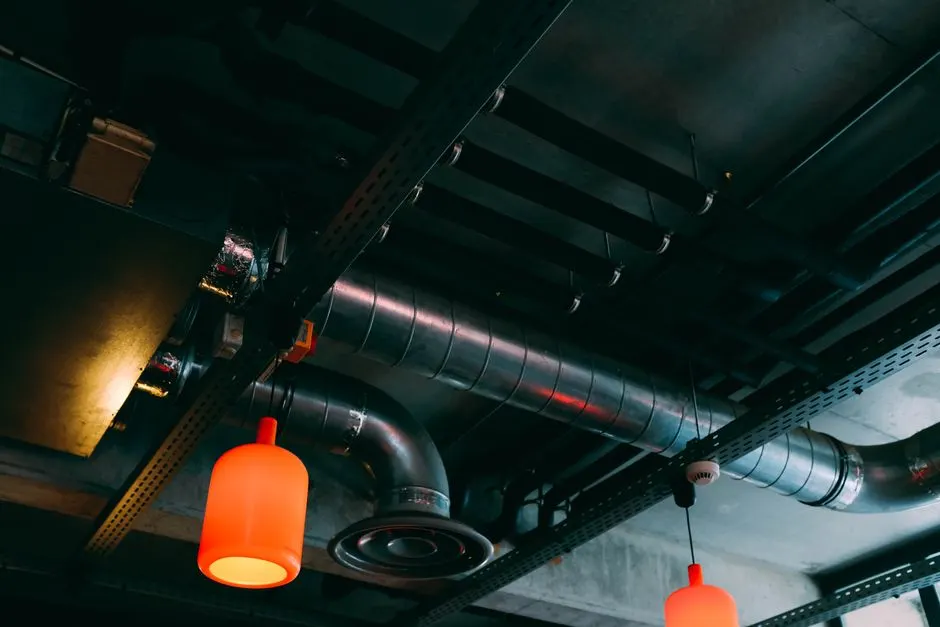
Indoor air quality services in Dallas improving home air are professional assessments and cleanings that remove the dust, pollen, mold spores, and chemical residues circulating through your HVAC system. In Dallas, where we run our air conditioners nine months out of the year, those contaminants build up faster than in milder climates. This post explains what's actually floating through your home, how to fix it, and when to bring in our team at Mendessa Works.
We've cleaned ducts in everything from 1920s bungalows in Oak Lawn to new builds in Uptown, and the problems repeat: clogged returns, dirty coils, and vents that haven't been touched since the house was built. Here's how we diagnose and solve them.
Why Dallas homes have unique indoor air quality challenges
Dallas homes face a combination of heat, humidity swings, and construction dust that accelerates duct contamination. Summer temperatures routinely hit 105°F, so your system pulls air through the same ducts for months without a break. That constant circulation deposits a fresh layer of dust every week.
Then there's the pollen. From March through May, oak and cedar pollen counts in North Texas regularly exceed 1,500 grains per cubic meter. Your HVAC filter catches some of it, but the rest settles inside the ductwork. When you switch to heating in November, that stored pollen gets blown back into your living room.
Older neighborhoods add another layer. In Oak Lawn air duct cleaning, we often find original galvanized ducts from the 1940s and 50s. They've never been sealed, so they leak 20-30% of conditioned air into attics and wall cavities. That leakage pulls in insulation fibers and rodent droppings. Newer suburbs aren't immune either - flexible ductwork in Frisco and Plano can sag and trap moisture, creating a breeding ground for mold.
What causes poor indoor air quality in Dallas
Poor indoor air quality in Dallas comes from five main sources: pollen intrusion, dust mite accumulation, pet dander, volatile organic compounds (VOCs) from building materials, and mold growth in damp ductwork. Each one behaves differently in our climate.
Dust mites thrive when indoor humidity stays above 50%. Dallas summers push humidity to 65-70% outdoors, and if your AC isn't sized right, indoor levels climb too. We've measured 60% relative humidity inside homes that felt perfectly cool. At that level, dust mites multiply fast.
VOCs are the sneaky one. New cabinets, flooring, and paint release formaldehyde and benzene for up to two years. In tightly sealed Dallas homes - which builders started constructing after 2010 to save energy - those chemicals have nowhere to go. They recirculate through your ducts every time the fan kicks on.
Mold is the most urgent. We find it in about one out of every four Dallas homes we inspect, usually in the evaporator coil pan or in flex duct runs that pass through unconditioned attics. A single neglected drip can grow mold across 10 square feet of duct liner in under a week.
How to improve indoor air quality in Dallas TX
Improving indoor air quality in Dallas TX starts with source control, then ventilation, then filtration. Most homeowners jump straight to buying a $400 air purifier, but that's step three. Here's the order that actually works.
1. Seal and clean the duct system
If your ducts leak, you're pulling attic air into your living space. We seal accessible joints with mastic and then run a negative-pressure cleaning that removes the built-up debris. For a typical 2,000-square-foot Dallas home, this takes 3-4 hours and costs $450-$800 in 2026. That's the foundation - everything else builds on it.
2. Control humidity
Keep indoor relative humidity between 30% and 50%. A $200-$350 dehumidifier for your HVAC system or a standalone unit for problem rooms does the job. We've seen dust mite populations drop by half when humidity stays under 50% for a month.
3. Upgrade filtration
Use a MERV 11 or MERV 13 filter if your system can handle the pressure drop. Change it every 60-90 days in Dallas - not the 6 months the packaging says. During pollen season, check it monthly. A dirty filter forces your blower to work harder and can push dust past the filter frame.
4. Add targeted air purification
A whole-home air purifier with a HEPA bypass or a UV-C light in the coil can knock down airborne bacteria and mold spores. For a single room, a standalone HEPA unit with a CADR of at least 200 for smoke is a reasonable $150-$300 investment.
5. Schedule professional IAQ services
If you've done the first four steps and still wake up congested, it's time for a full assessment. Our indoor air quality services Dallas TX include particle counting, moisture mapping, and a written report with photos. We don't guess - we measure.
Indoor air quality testing Dallas TX: what we measure
Indoor air quality testing Dallas TX measures particulate matter (PM2.5 and PM10), volatile organic compounds, carbon monoxide, humidity, and mold spore counts. We use a handheld particle counter and a moisture meter, and we take air samples from three zones: the return grille, a bedroom, and the kitchen.
Typical findings in a Dallas home that hasn't been serviced: PM2.5 levels of 35-55 µg/m³ (the EPA recommends staying under 12 µg/m³ for good air). After cleaning and sealing, we routinely bring that down to 8-14 µg/m³. That's a 70% reduction, and you can feel it - less sneezing, fewer headaches, better sleep.
We also check for carbon monoxide. Any reading above 9 ppm means you have a combustion appliance problem, and we'll shut down the system and refer you to an HVAC specialist immediately. That's rare, but it's the one finding we never ignore.
Testing takes about 45 minutes and costs $150-$250 as a standalone service. If you book it with a duct cleaning, we waive the testing fee. We serve the entire metroplex, including Downtown Dallas air duct cleaning clients who live in high-rises with shared ventilation - those buildings have their own set of challenges.
Air purifier and duct cleaning Dallas TX: do they work together?
Air purifier and duct cleaning Dallas TX work best as a pair, not as substitutes. A purifier cleans the air that reaches it. Duct cleaning removes the reservoir of contaminants that keeps re-contaminating your air. If you only do one, you're fighting a losing battle.
Here's the math: a standalone HEPA purifier processes about 200-300 cubic feet per minute. Your HVAC blower moves 1,200-2,000 CFM. So the purifier is cleaning 15-20% of your air at best. Meanwhile, every time the fan runs, it stirs up dust from the ducts and redistributes it through the house.
We recommend cleaning the ducts first, then installing a whole-home purifier or a high-MERV filter. That sequence gives you the biggest drop in airborne particles per dollar. For homes with pets, we also suggest our pet hair duct cleaning Dallas TX service - pet dander is sticky and clings to duct walls, so standard cleaning sometimes misses it.
If you have allergies or asthma, the combination is non-negotiable. We've had clients tell us they stopped waking up with sinus pressure within two weeks of a full clean-and-purify job.
Common mistakes that keep Dallas home air dirty
The biggest mistake Dallas homeowners make is treating air quality as a one-time fix. Your ducts don't stay clean forever - they reaccumulate dust at a rate of about 1-2 millimeters per year in a typical home. Here's what else we see go wrong.
- Using cheap fiberglass filters. The $1 filters catch less than 10% of particles under 5 microns. Spend $15-$25 on a pleated MERV 11 instead.
- Ignoring the air handler. The blower wheel and evaporator coil collect dust like a magnet. If you clean the ducts but not the coil, you've done half a job.
- Closing vents in unused rooms. This raises pressure in the duct system and forces air out through leaks. It also makes the compressor work harder.
- Running the fan continuously. In Dallas, that pulls humid attic air into the ducts during the day. Run the fan only when heating or cooling.
- Skipping annual inspections. A $99 inspection catches small problems before they become $1,500 mold remediations.
We also see homeowners buy ozone generators. Don't. Ozone is a lung irritant, and the EPA has warned against using it in occupied spaces. If a company tries to sell you one, walk away.
When to call a professional for indoor air quality services
Call a professional when you notice musty odors, visible dust plumes from vents, or allergy symptoms that worsen when the HVAC runs. Those are the three clearest signals that your duct system needs attention. If you've lived in your Dallas home for more than three years and never had the ducts cleaned, you're overdue.
We handle everything from a single-room vent cleaning to a whole-house assessment. Our team at Mendessa Works is licensed and insured, and we use negative-pressure equipment that keeps dust out of your living space during the job. We'll show you before-and-after photos of your own ducts - not stock images.
If you're a landlord or property manager, we also offer commercial-grade service for multi-family buildings. And if you need help fast, we have same day air duct cleaning Dallas TX available for urgent situations like water damage or a rodent infestation in the ducts.
Frequently Asked Questions
How can I improve indoor air quality in my Dallas home?
Start by sealing and cleaning your ducts, then control humidity to 30-50%, upgrade to a MERV 11 filter, and add a HEPA or UV purifier. In Dallas, you should also change filters every 60-90 days because of high pollen and dust loads. Professional testing confirms what's actually in your air.
How much do indoor air quality services cost in Dallas TX?
Typical 2026 pricing: duct cleaning runs $450-$800 for a 2,000-square-foot home. Air quality testing is $150-$250 standalone, or free with a cleaning. Whole-home purifier installation adds $600-$1,200. We provide a flat quote before any work begins.
What causes poor indoor air quality in Dallas?
Dallas's heat and humidity drive dust mite growth, while spring pollen infiltrates through open windows and HVAC intakes. Older homes have leaky ducts that pull in attic dust and insulation fibers. Newer airtight homes trap VOCs from paint and cabinets. Mold is common in attic duct runs.
Do air purifiers help indoor air quality in Dallas?
Yes, but only when paired with clean ducts. A standalone HEPA purifier handles 15-20% of your air volume; your HVAC moves far more. Clean the ducts first, then add a whole-home purifier or high-MERV filter. That combination cuts airborne particles by 70% or more.
How often should indoor air quality be tested in Dallas Texas?
Test every 12-18 months, or immediately after any water leak, renovation, or pest problem. Dallas's pollen season and long cooling season accelerate contamination, so annual testing is smart if anyone in your home has allergies or asthma. We offer reminder scheduling.
Get help with Air duct Cleaning in Dallas
If your home air feels heavy, dusty, or just not right, our team at Mendessa Works can diagnose and fix it. We offer Air duct Cleaning and full indoor air quality services across Dallas, with upfront pricing and no hidden fees. Call us at (855) 947-6462 to schedule your assessment.